Nepal and Bhutan are prayer flags, Himalayan views, quiet monasteries and some of the kindest people you’ll meet. Here’s everything we’d tell a friend before she goes.
Looking for what to bring? That’s all in our Nepal + Bhutan packing list.
Money and tipping
Cards work in some hotels, but cash runs most things in both countries. Take out rupees in Kathmandu, and bring some clean US dollars as a backup. In Bhutan, ATMs are fewer, so your guide will help you plan ahead.
Tipping your guide is a lovely way to say thank you, and it’s the one we leave to you. Most travelers give $10 to $12 a day.
In Nepal, your driver’s tip is already covered. In Bhutan, it isn’t, and $5 a day is a kind thank-you for them. Out on your own, many restaurants in Nepal add a service charge, and tipping in Bhutan is appreciated but never expected.
Culture and etiquette
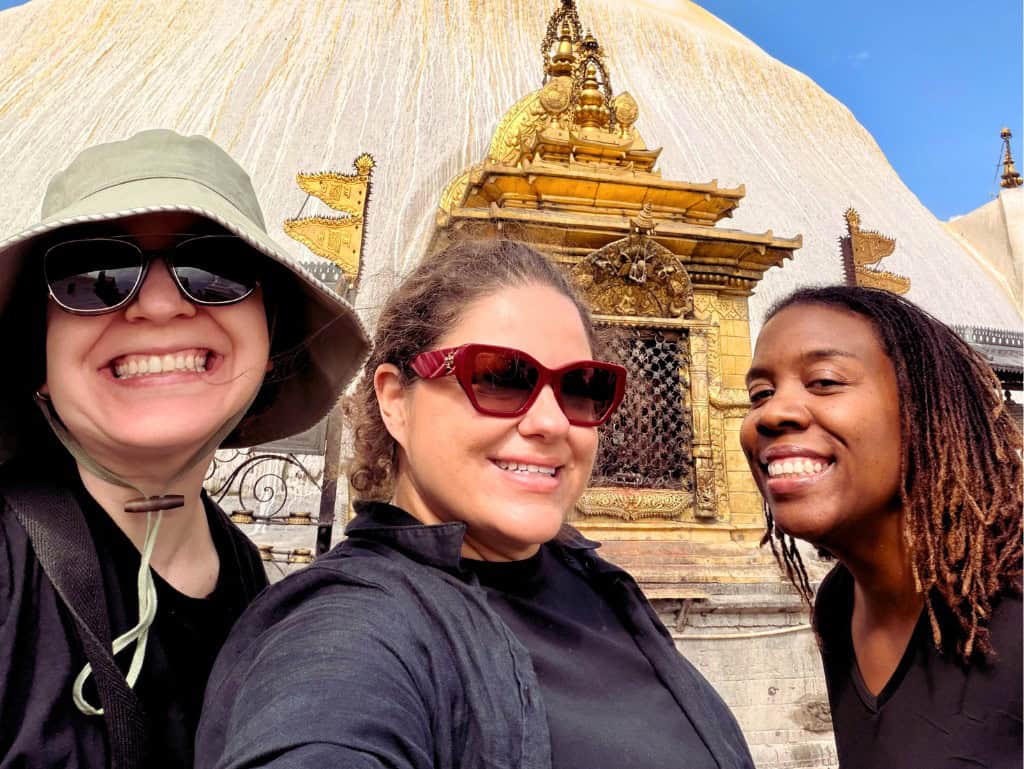
Walk clockwise around stupas, temples and prayer wheels, and take your shoes off before entering a shrine. Avoid touching anyone’s head or pointing your feet at people or altars.
Bhutan takes dress codes seriously. At dzongs and temples, wear long sleeves and a long skirt or long pants, take off your hat and don’t take photos inside. Namaste works beautifully in Nepal, and kuzuzangpo la is the warm way to say hello in Bhutan.

Staying healthy and safe
Drink bottled or filtered water only. Some days take you to higher altitude, so drink plenty of water, go slow and tell your guide if you get a headache.
Nepal and Bhutan are very safe and kind places to travel. Kathmandu can be dusty and chaotic, so a face mask helps on busy days. One Bhutan quirk: tobacco is tightly restricted, so don’t plan on buying cigarettes there.

Tiger’s Nest and sacred spaces
The hike to Tiger’s Nest takes about four to five hours round trip, with steady uphill sections and stone stairs. Go at your own pace. Everyone makes it with breaks.
Inside the monastery, photos aren’t allowed and you’ll leave your bag and phone at the entrance. Take a quiet moment. It’s worth every step.
FAQ: Nepal + Bhutan
Is it safe for women?
Yes. Both countries are known for being gentle and welcoming, and you’ll be with your group and guide throughout.
Do I need a visa?
Nepal offers a visa on arrival for many nationalities. Bhutan’s visa is arranged in advance as part of your trip.
How hard is the altitude?
Most travelers feel fine. Drink plenty of water, go slow on hikes and let your guide know if you feel unwell.
The bottom line
Walk clockwise, dress for the dzongs and take Tiger’s Nest slowly. The Himalayas will do the rest.
Want to go? See our Nepal + Bhutan trip, and read how we travel together.