Turkey is Istanbul’s mosques and markets, Cappadocia’s fairy chimneys, Roman ruins and a boat day on the Aegean. It’s also a lot of walking, a lot of stairs and a lot of very good food.
So this is a pack-for-variety trip: city clothes, a few modest pieces, comfortable shoes and a swimsuit.
We built this list for our Turkey trip, but it works for any late spring or summer trip to Turkey.

Turkey weather: what to expect
Late spring and early summer are lovely in Turkey. Istanbul is usually in the 70s °F (20s °C). Cappadocia is higher up, so mornings and evenings are cool even when afternoons are warm. The Aegean coast around Kuşadası is hot and sunny.
Translation: light, breathable clothes, one warm layer for Cappadocia mornings and serious sun protection for the coast and the ruins.
What to wear
For Istanbul and cities
Istanbul is modern and stylish, but you’ll feel more comfortable in clothes that aren’t too revealing, especially in older neighborhoods.
- Light pants or wide-leg trousers
- Midi or maxi skirts and dresses
- T-shirts and blouses
- A light jacket or cardigan for evenings
- A big scarf
For mosques
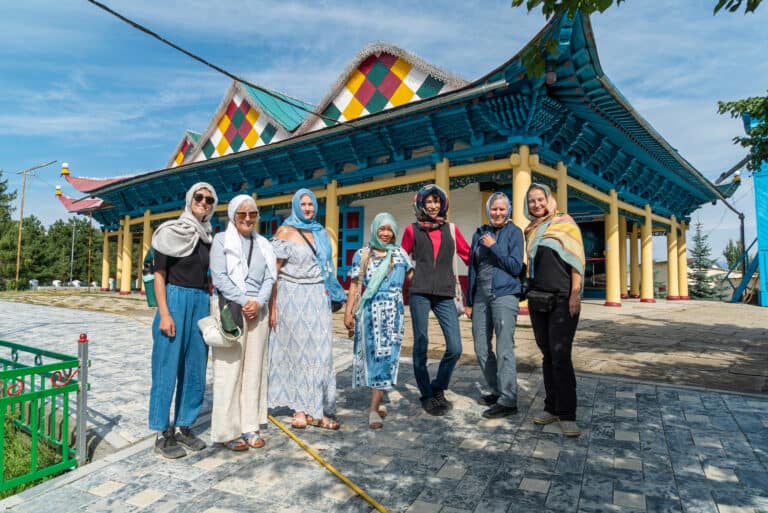
Cover your shoulders, arms and knees, and cover your hair with a scarf. Long skirts or loose pants work best since you’ll take your shoes off at the door. Some mosques lend coverings, but bringing your own is easier.
For ruins and small towns
Ephesus is big, open and hot, with very little shade. Safranbolu, Amasya and Şirince are small and more traditional. Breathable, covered clothes, a hat and sunglasses work for both.
For Cappadocia
Cool mornings and sunny afternoons. A warm layer for early starts, comfy pants and shoes for cave churches and valley walks.
For the coast
Bring a swimsuit and a cover-up for the boat day off Kuşadası.

Shoes: bring two or three pairs
- Everyday: cushioned walking shoes or sneakers. Istanbul is hills and stairs, and Ephesus is uneven marble.
- Easy on, easy off: slip-ons or sandals for mosques and hot days.
- Beach: sandals or slides for the boat day.
Make sure everything is broken in before you go.

Health and toiletries
- High-SPF sunscreen and lip balm with SPF
- Pain relievers, electrolytes, band-aids, blister care and stomach meds
- Motion sickness meds for the boat and winding drives
- Hand sanitizer, wet wipes and tissues
- Prescription meds in their original packaging, plus extra days
Pharmacies are everywhere in Turkey, so you don’t need to pack for every scenario. Travel insurance is required for this trip.

Electronics, documents and money
- Universal adapter (Turkey uses European Type C and F plugs, 230V)
- A power bank for long days
- Extra storage for photos
Bring your passport with at least six months of validity and check entry requirements for your nationality before you go.
Cards are widely accepted, but bring a debit card for ATMs and some Turkish lira for markets, small cafés, tips and bathrooms. Keep a backup card stored separately.
What to leave at home
- Short shorts and very revealing tops
- Heels (cobblestones, stairs and marble)
- Too many outfits (you will rotate the same 4 or 5)
- A hair dryer (hotels have them)
FAQ: packing for Turkey
Do I need to cover my hair in Turkey?
Only in mosques. Bring a scarf in your daypack and you’re set.
Can I wear shorts?
Knee-length shorts are fine on the coast and in touristy areas. In Istanbul’s older neighborhoods and small towns, pants, skirts and dresses feel more comfortable.
Do I need hiking boots?
No. Comfortable walking shoes or sneakers are perfect.
What luggage should I bring?
A rolling suitcase or a soft duffel both work. We take a domestic flight, so check the baggage allowance and pack one manageable bag plus a daypack.
Should I bring a swimsuit?
Yes, for the boat day on the coast.
Is laundry available?
Yes, at most hotels. Plan it for places where you stay two nights.
The bottom line
Pack light layers, a scarf and comfortable shoes, and save room for a swimsuit. Turkey will do the rest.
Want to go? See our Turkey trip, or browse all our upcoming trips.